
Every major gaming platform has been defined by a new distribution surface
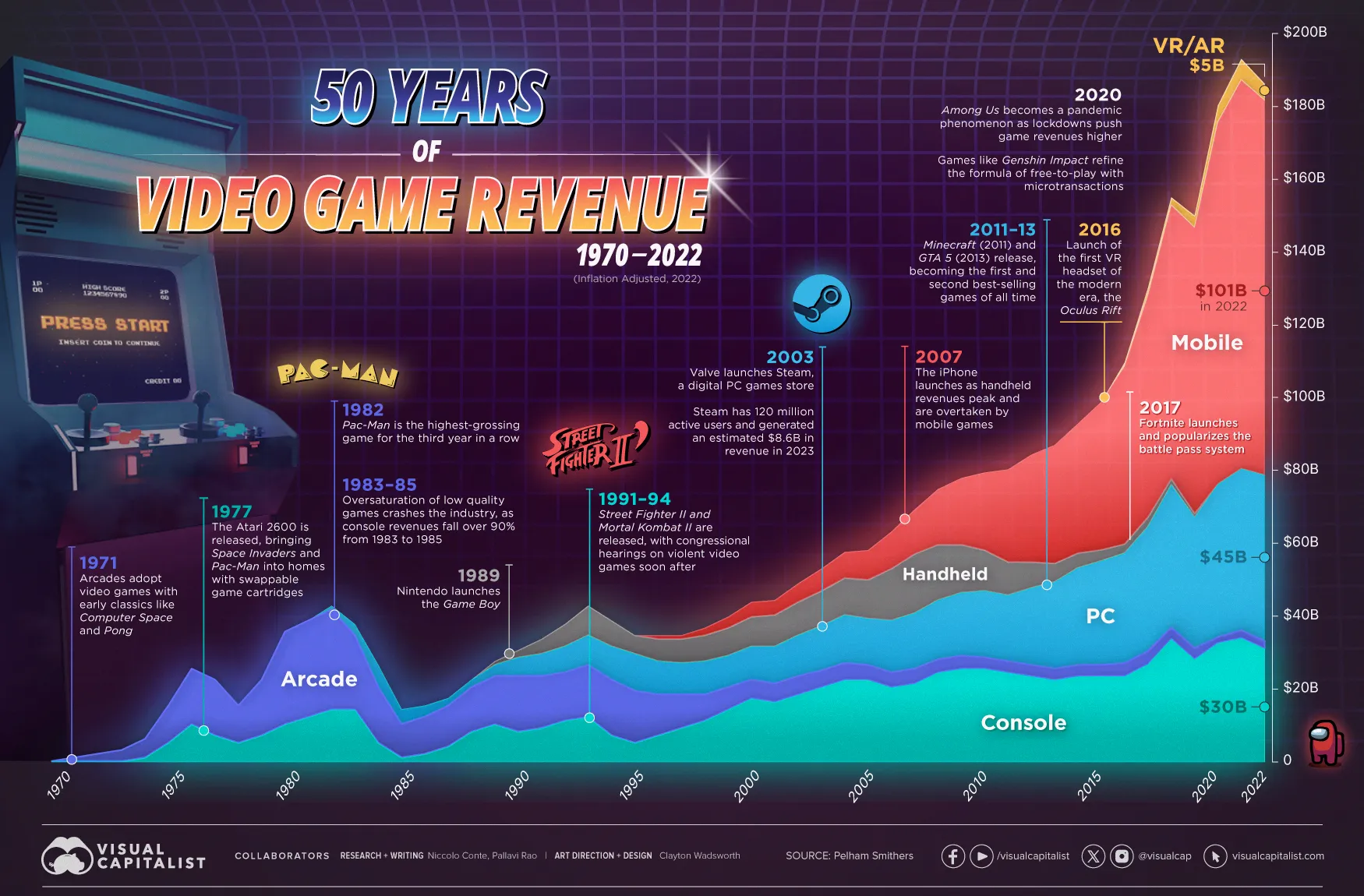
I love this graphic from the incredible team at Visual Capitalist. It shows something most people intuitively understand - but rarely articulate clearly:
Every era of gaming has been defined by a new distribution surface:
- Consoles turned the living room into a gaming hub.
- PCs unlocked online multiplayer and mod ecosystems.
- Mobile put a game in every pocket.
Each platform offered a new way to reach players, a novel distribution mechanism.
At Jest, we believe we’re at the beginning of another one: messaging.
Why messaging
Messaging is no longer just communication - it’s an interface.
From AI assistants to customer support bots, users have grown accustomed to interacting with technology through chat.
Jest builds on this shift by pioneering messaging games - turning native messaging apps into a new distribution surface for interactive entertainment.
Three structural advantages make this approach incredibly powerful:
- Universal - Messages come pre-installed on smartphones. Developers can reach iOS and Android users instantly through an interface they already use every day.
- Sticky - The messaging inbox is mobile’s most retentive surface. It’s where people stay in touch with friends and family. That level of daily engagement is something most gaming platforms can only dream of.
- New app-like superpowers - Messaging hit a structural inflection point in late 2024, when RCS became effectively universal across modern smartphones. The inbox transformed from simple text threads into an interactive, app-like surface.
Few people fully understand how significant this shift is - so let’s unpack what’s actually happening.
The RCS inflection point
In late 2024, Apple adopted RCS with iOS 18.
That decision changed the trajectory of messaging.
Until then, RCS was mostly an Android story. With iOS adoption, it became cross-platform by default - embedded inside the native Messages app on nearly every modern smartphone.
That interoperability is what turns messaging into a platform.
RCS upgrades the inbox from simple text threads to a rich, interactive, app-like surface - complete with verified brand identities, media, and structured actions.
And because it lives inside the built-in messaging app, distribution is instant.
RCS is now on track to reach 3.8 billion daily active users by the end of 2026.
This moment goes far beyond a feature release or even gaming itself. We’re witnessing the foundation of a new application layer - one where messaging becomes the platform and entirely new interactive experiences can be built directly inside conversations. Gaming is the obvious first expression of this shift, given it represents more than half of the App Store’s economic activity.
SMS → RCS
When most people think about texting, they picture SMS: simple text threads tied to a phone number.
What’s easy to miss is that texting is being upgraded in place, without manual updates or installs.
RCS is rolling out rapidly across modern smartphones. No new apps. No new behavior. The Messages app simply becomes more capable.
The inbox shifts from basic text and links to a richer, interactive surface with verified identities, media, and structured actions.
Subtle in appearance, but transformative in capability.
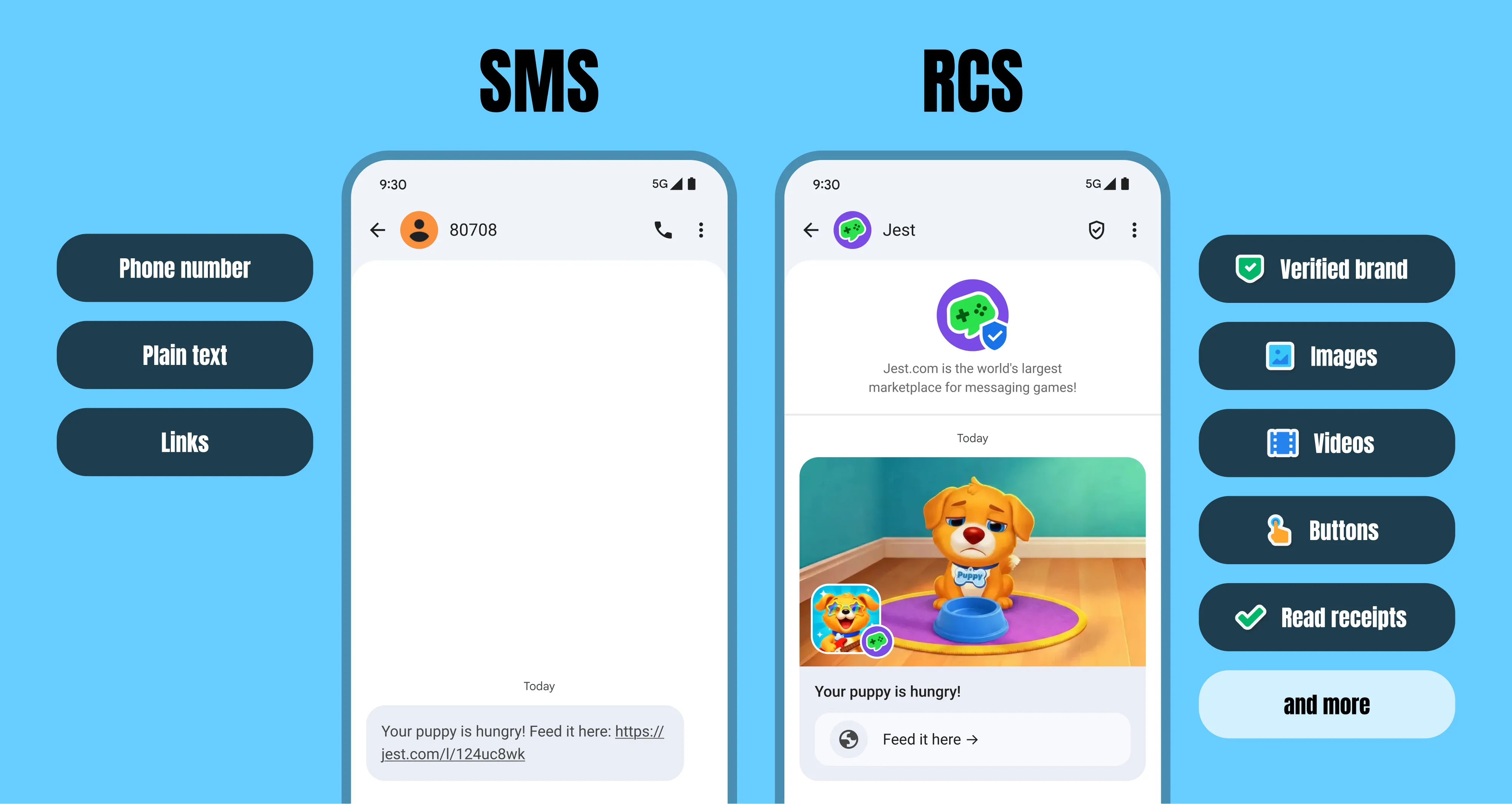
| Feature | SMS | RCS for Business |
|---|---|---|
| Sender Identity | Phone number only | Verified brand name with checkmark |
| Branding | None | Logo, brand name, tagline |
| Media Support | Basic links only | High-resolution images, carousels, rich media |
| Interactivity | Manual replies (“Reply YES”) | Tappable buttons, suggested replies, structured actions |
| User Experience | Static text thread | Dynamic, app-like conversational interface |
| Trust & Verification | No authentication | Verified sender identity reduces spoofing |
| Analytics | Limited delivery confirmation | Read receipts, engagement tracking |
| Capability Level | Messaging channel | Programmable surface |
SMS made messaging ubiquitous.
RCS builds on that foundation by adding identity, interactivity, and programmability to a surface billions of people already use every day.
That combination creates the conditions for entirely new categories of software, including messaging apps and games.
Messaging games are coming
Every major gaming wave has been driven by a shift in distribution, from consoles to PCs to mobile. Messaging represents the next structural unlock: a built-in surface with billions of users and zero install friction.
This shift gives rise to a new medium: messaging games.
At Jest, we’re building the platform that enables, distributes, and scales messaging games across native messaging apps.